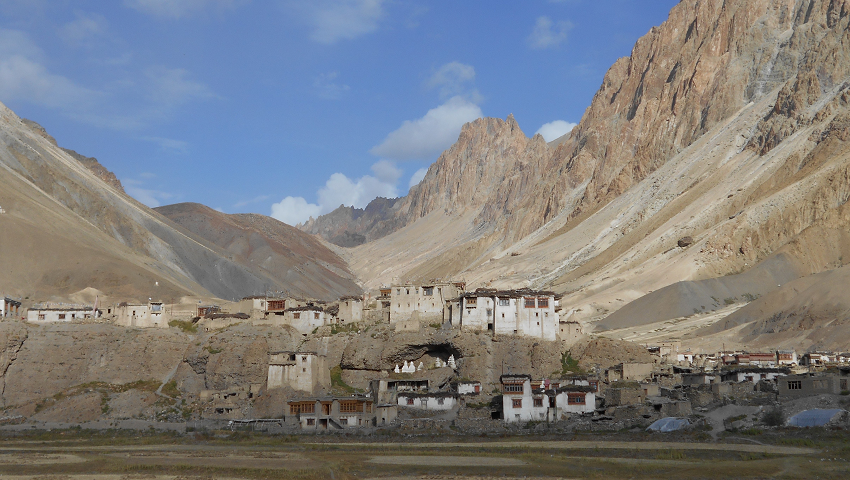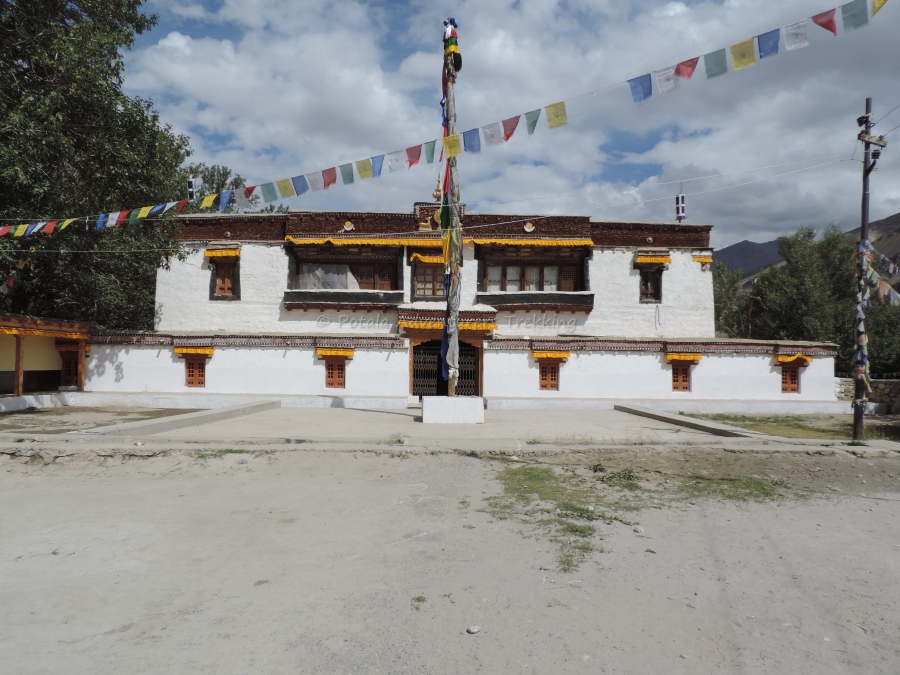
Zanskar refers to a high-altitude region in the Union Territory of Ladakh, India, known for its remote Zanskar Valley and the surrounding Zanskar Range.
Zanskar is one of the most isolated and sparsely populated parts of the Himalayas, traditionally part of the Kargil district but recently designated to become its own district by 2028.
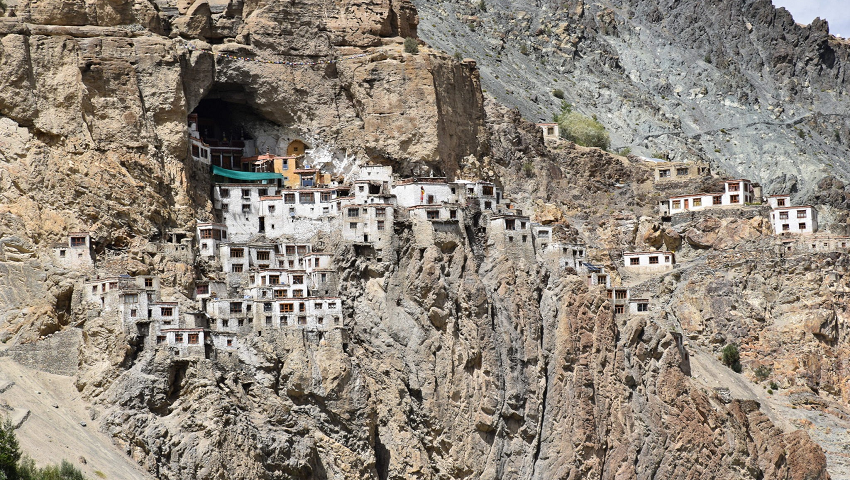
Geography: A high-altitude semi-desert at 3,500–7,000 metres, protected from the monsoon by the Great Himalayan Range. Padum: The administrative centre and largest village. Phugtal Monastery: A unique monastery built into a cave. Zanskar River: Famous for the Chadar Trek, a winter trail over its frozen surface. Gumbok Rangan: A sacred, standalone peak known as "God's Mountain". Culture: Primarily Tibetan Buddhist, known for preserving ancient traditions due to its geographical isolation. Adventure Sports: The Zanskar River offers world-class white-water rafting (Grade III to V) in summer and the famous Chadar Trek (Frozen River Trek) in January and February.
The valley is now accessible via three primary routes, though most remain seasonal:
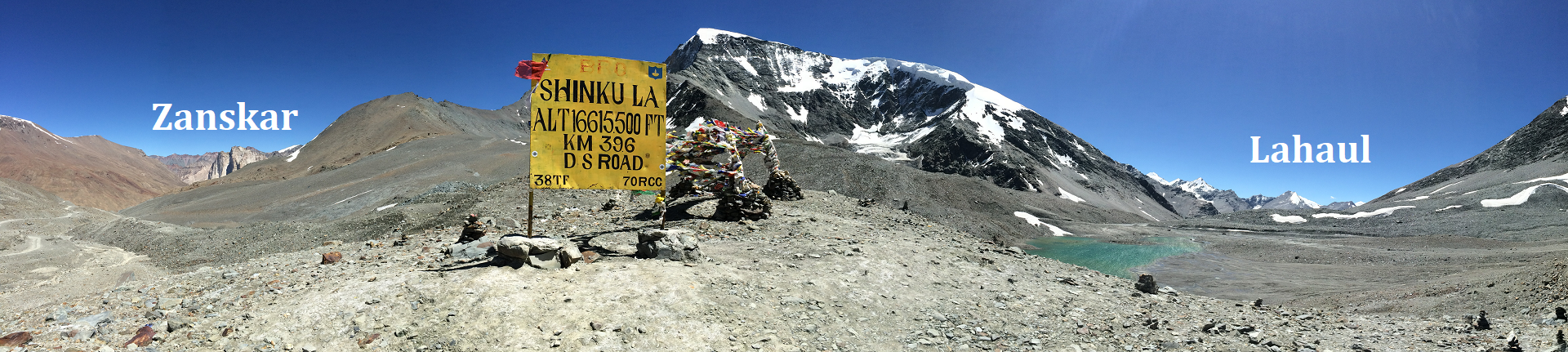
Via Manali (Shortest): Manali - Darcha - Shinku La Pass - Padum. This route is typically open from April to December. A 4.1km all-weather tunnel is currently under construction beneath Shinku La, with a revised completion target of August 2028.
Via Kargil (Traditional): Srinagar/Leh - Kargil - Suru Valley - Pensi La Pass - Padum. This scenic route is generally open from June to September.
Via Leh (Adventurous): Leh - Nimmu - Padum. This newer axis (N-P-D road) is under construction to provide a third gateway to the region.
Best Time: June to September for pleasant weather
Connectivity: Extremely limited. Only Postpaid works reliably in Padum. There is a frequent scarcity of fuel, so travelers should fill up in Kargil or Padum.
Health: Due to the high altitude (3,500m to 7,000m), 2 days of acclimatisation in Lahaul, Leh or Kargil is highly recommended to avoid Acute Mountain Sickness (AMS).
Setting off from Manali for 6 days trip, the first day's drive to Keylong Jispa via Atal Tunnel Rohtang, a new gateway to Lahaul, Spiti, Pangi, and Zanskar valleys. Passing through the beautiful Chandra valley with some spectacular views of peaks rising above 6000 m. At Tandi, where Chandra & Bhaga meet to form the Chenab River, we enter Gahar Valley and continue to Jispa in the Stod Valley. A night in Keylong or Jispa in Lahaul will ensure proper acclimatization.
Chikka and Rarik are the last villages in Lahaul before Shinkun la, and Kurgiakh is the first village in the Lungnak River valley of Zanskar. We cross Shinkun La (5,090 m) to get into Zanskar. Lakhong is a high pasture land where villager from Kurgiakh, Thangso village keep their domestic animals, Yak, dzo, sheep, goats, and horses for summer grazing. This is the upper slopes of Zanskar where meadows are covered with edelweiss, and at the foot of Gumbok Rangan peak (5,580m), a Blue poppy can be found. Next, a series of beautiful villages along the route to Purney, which is located at the confluence of the Kurgiakh chu and the Tsarap River. Purney to Phugtal road is still under construction, and a 2:30-hour walk to one of the most spectacular sights of Zanskar - The Phugtal gompa. It is built under a huge cave. Continuing from Purne to Anmo village to Raru and finally to Karsha, bypassing Mune, Bardan & Padum. The next couple of days, visit the sights in the heart of Zanskar before entering Suru Valley in Kargil. Finally back to Manali via Shinku La, where our trip ends.
ZANSKAR TOUR - MANALI TO MANALI ITINERARY
Day 1: Manali – Solang Valley – Atal Tunnel – Sissu – Keylong – Jispa 3200, 92 km, 3-4 hrs
Day 2: Jispa - Shinku La 5090m - Gumbok Rangan 4330m - Kurgiakh 4150m – Kyi Hike – Khangsar - Hike to Phuktal Gonpa 3900m, 2 hrs, Phuktal - Bardan – Padum 3600m, 148km, 7 hrs drive, 2-3 hrs trek
Day 3: Padum – Karsha 3750m – Stongde 3800m – Zangla Fort & Zangla Nunnery – Lingshed Gonpa – Padum 3600m, 170 km, 8-9 hrs.
Day 4: Padum – Sani - Dzonkhul 3890m – Abran 3750m - Drang Drung glacier - Pensi La 4494 m – Rangdum 4040m, 160 km, 6-7 hrs.
Day 5: Rangdum – Parkachik 3600m (Glacier view point) – back to Rangdum - Pensi La - Padum 3600m, 197 km, 7-8 hrs.
Day 6: Padum – Shinku La 5090 – Manali, 240 km, 8-9 hrs.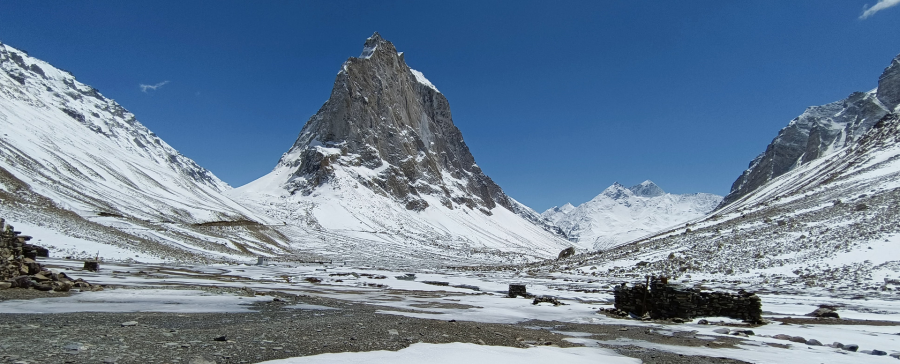
Gumbok Rangan 5520m aka Gonbo Rangjon - "God's Mountain."
ZANSKAR VALLEY TOUR DETAILED ITINERARY
Day 1: Manali – Solang Valley – Atal Tunnel – Sissu – Keylong – Jispa 3200, 92 km, 3-4 hrs.
Leaving Manali first to Solang Valley and then to the Atal Tunnel, which is now the new gateway to Lahaul, Spiti, Pangi, and Zanskar Valley. The landscape changes dramatically, with greenery being replaced by barren hillsides, surrounded by high peaks and hanging glaciers. The village, with its bountiful fields of barley, peas, and potatoes, stands out in stark contrast. Upon entering Lahaul, the Buddhist influence is evident in the numerous monasteries encountered along the way. The people here have distinct Tibetan features. From Tandi, along the Bhaga River, to Keylong and Jispa, you will have the opportunity to do an acclimatization hike in Keylong before heading to Jispa. This acclimatization hike will last for 4 to 5 hours, crossing the Bhaga River to Kardang Gonpa. Finishing the hike at Yurnad, continue driving to Jispa for an hour. Check into the hotel.
Day 2: Jispa - Shinku La 5090m - Gumbok Rangan 4330m - Kurgiakh 4150m – Kyi Hike – Khangsar - Hike to Phuktal Gonpa 3900m, 2 hrs, Phuktal - Bardan – Padum 3600m, 148km, 7 hrs drive, 2-3 hrs trek.
Continuing Jispa to Darcha and to Chikka & Rarik, the last two villages before Shinku La. Crossing the bridge at Palamo and then along the river to Zanskar Sumdo. Leaving Zanskar Sumdo, the road goes above the stream, following the stream that originates from Shinku La. The highest point of our trip at 5,090 meters. On top of Shinku La, there are prayer flags and mani stones that tell the story of those people who crossed over years back. With an impressive view of the Zanskar side of the valley, with summits rising above 6000 m of the Great Himalayan range. The road descends to Lakhong. Lakhong is high pasture land for yaks, dzo, and sheep, where domestic animals are kept during summertime and produce cheese and butter for winter stock. Along the right bank of Kurgiakh chu and below the mass of fallen rocks of Gumbok Rangan peak. We finally arrive at Kurgiakh, the first village of Zanskar. A short hike to the most beautiful village of Kyi in the Upper Zanskar valley.
We pass the Karu, Tangze village, to a series of stupas before reaching Purne. Purne is situated at the confluence between Tsarap and Kurgiak chu and forms the Lungnak River valley.
Purne to Phuktal distance: There is a road that goes along the left bank of the Tsarap River up to a wooden bridge 5 km from Purne, a hike of 2 km take you to the most fascinating sight in Zanskar. This monastery is built under a huge cave, and it belongs to the Gelukpa sect of Tibetan Buddhism. There is a stone tablet that serves as a reminder of the stay of Alexander Csoma de Koros at Phuktal, while he worked on the first English-Tibetan dictionary between 1826 and 1827, when he explored Ladakh.
Leaving Phuktal to Cha village & passes through the beautiful village of Anmu, Raru & Mune, passing and visiting Bardan gompa, continue to drive to Padum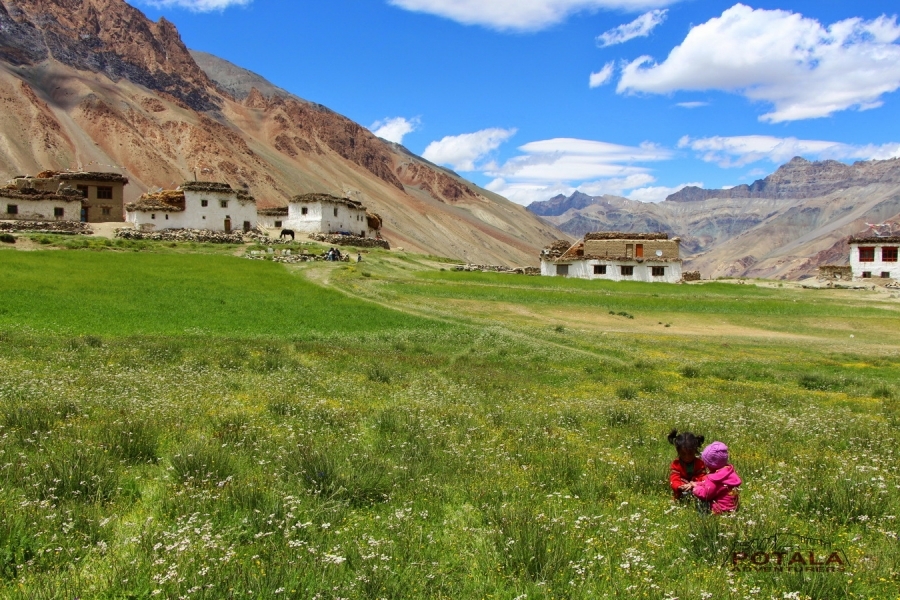
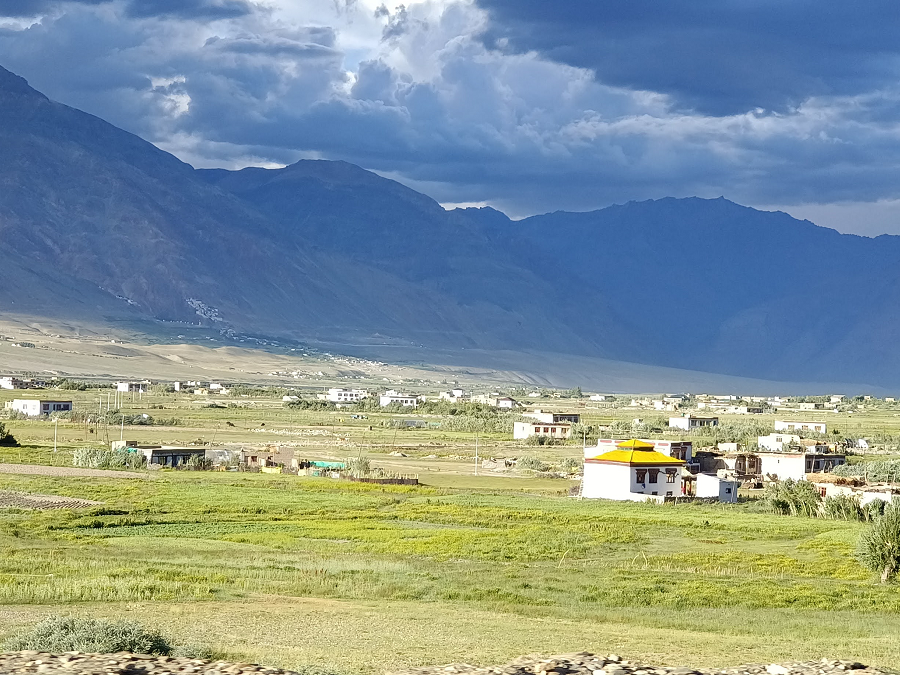
Kyi village across Kurgiak Chu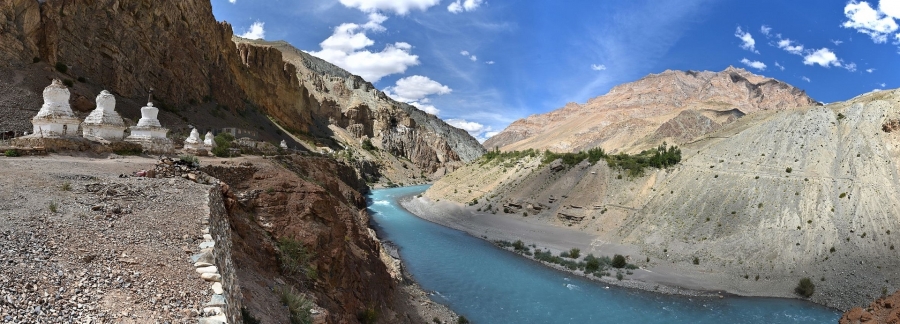
Phuktal Gonpa & Tsarap River
Day 3: Padum – Karsha 3750m – Stongde 3800m – Zangla Fort & Zangla Nunnery – Lingshed Gonpa – Padum 3600m, 170 km, 8-9 hrs.
Today major attraction of the tour, the Central Zanskar Valley day tour, is the first visit to Karsha monastery. Karsha is one of the biggest monastic complexes in the Zanskar region.
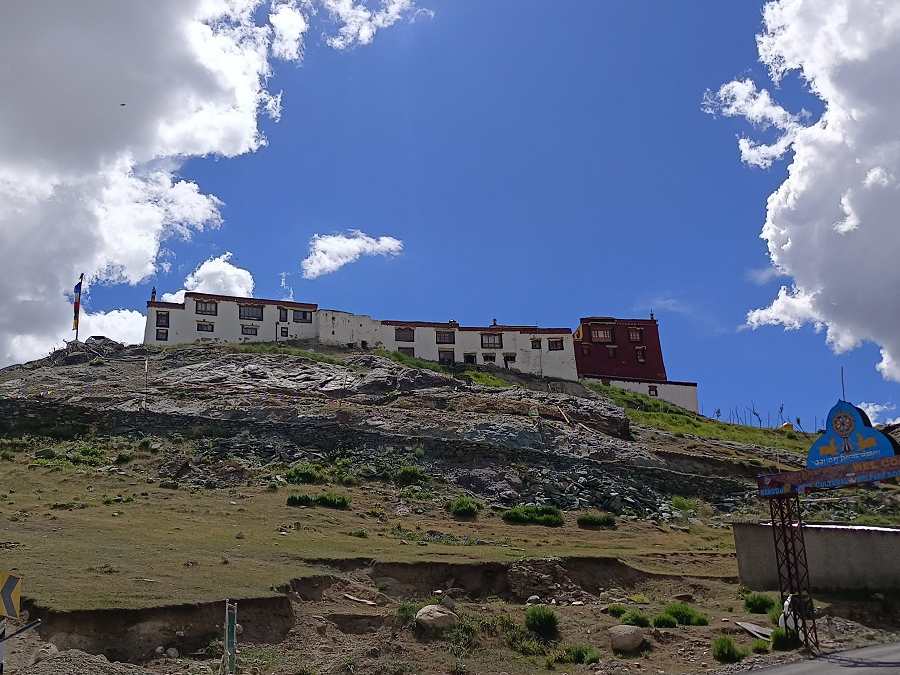
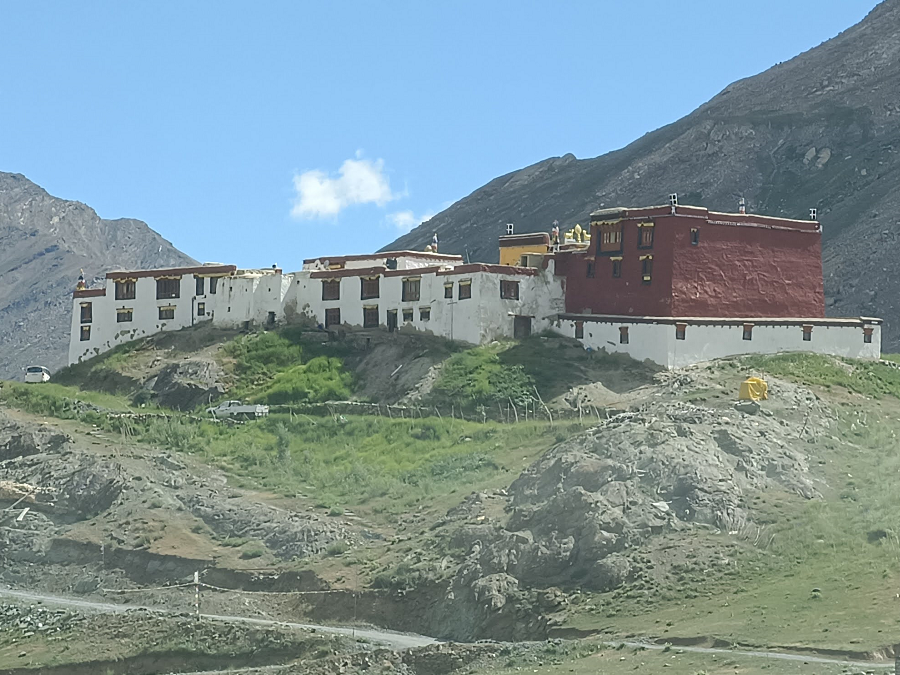
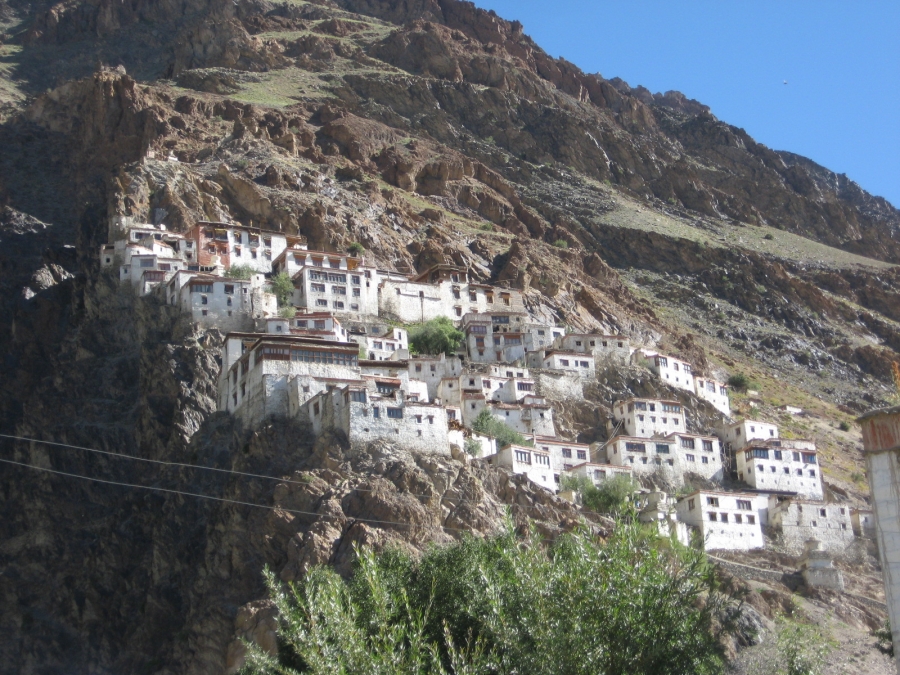
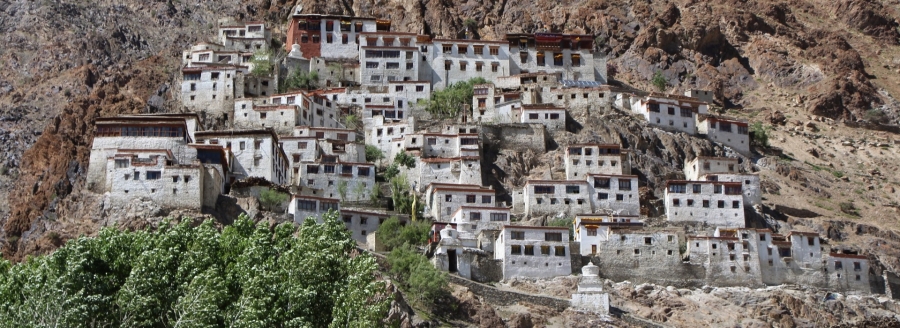
Karsha Gompa is the largest and most important monastery in Zanskar. Perched dramatically on a steep hill overlooking the Padum Valley and the Zanskar River, this 10th-century complex functions as a major scholastic and spiritual hub for the region.
Fortress-like Architecture: The monastery is built in a stepped, cliff-clinging style traditional to Tibetan architecture, housing residential quarters for about 100 monks.
Ancient Art: It contains murals and thangkas that are over 900 years old, including exquisite paintings by the master artist Lama Dzadpa Dorje.
Sacred Relics: The monastery preserves the bone relics of Dorje Rinchen and a silver-crowned statue of Lhaso Cho Rinpoche brought from Lhasa in the 1960s.
Chuk-shik-jal Temple: The oldest structure within the complex, dedicated to Avalokiteshvara, featuring wall paintings linked to the era of the great translator Rinchen Zangpo (958–1055 CE).
Karsha Gustor: This is the most significant annual event, celebrated to mark the victory of good over evil.
2026 Dates: The festival is scheduled for 12–13 July 2026.
Activities: Monks perform sacred Cham (masked) dances and the "Black Hat Dance," accompanied by traditional music and community prayers.
Spiritual Leadership: The monastery is under the control of the younger brother of His Holiness the Dalai Lama.
Leaving Karsha to Thongde, which is built on a hilltop by Lama Marpa and is more than 950 years old, finally drive to visit Zangla Fort. Just above Zangla village, there is a Nunnery that is home to a small community of nuns. The nunnery is a peaceful retreat, offering visitors a chance to experience the spiritual and simple life led by the nuns. Zangla Nunnery is known as
Changchub Choling monastery, Zangpa, since 1989. Funds have been used to build a classroom, provide food for the nuns, and teachers’ salaries. A teacher in the village helps the nuns keep their accounts.
18 nuns are living in the monastery, and 15 novices are living at home who come during the day. Of the 18 nuns living in the monastery, 6 are under 30 and 3 are over 50. The youngest nun is 12 years old, and the oldest is 78. One young nun related that her mother died and her elder sister is disabled and cannot work. She has 3 younger sisters and brothers. She lives at home and comes to the monastery daily for studies. https://www.jamyang.org/pages/changchubcholing.php
Continue to Lingshed Monastery is a Gelugpa Buddhist monastery in Ladakh. It is located near Lingshet village. It is 84 km north of Padum. It was founded in the 1440s by Changsems Sherabs Zangpo, disciple of Je Tsongkhapa, on a monastic site previously founded by the Translator Rinchen Zangpo. The monastery has belonged to the religious estate of Ngari Rinpoche since 1779. The Jangchub Tensung Dorje Center was founded in Lingshed by Kyabje Dagom Rinpoche in 1994.
In 1779, the Ladakhi king Tsewang Namgyal donated the lands of Lingshed and its surrounding villages (along with the Zanskari monasteries and villages of Karsha, Mune, Phuktal and Rangdum) to Lobsang Gelek Yeshe Dragpa, the 3rd incarnate of the Ngari Rinpoche lineage. In 1783, Ngari Rinpoche founded Rangdum Monastery on the boundary of the Karsha Valley as his ecclesiastical seat, to which Lingshed is subordinate.
Finally back to Padum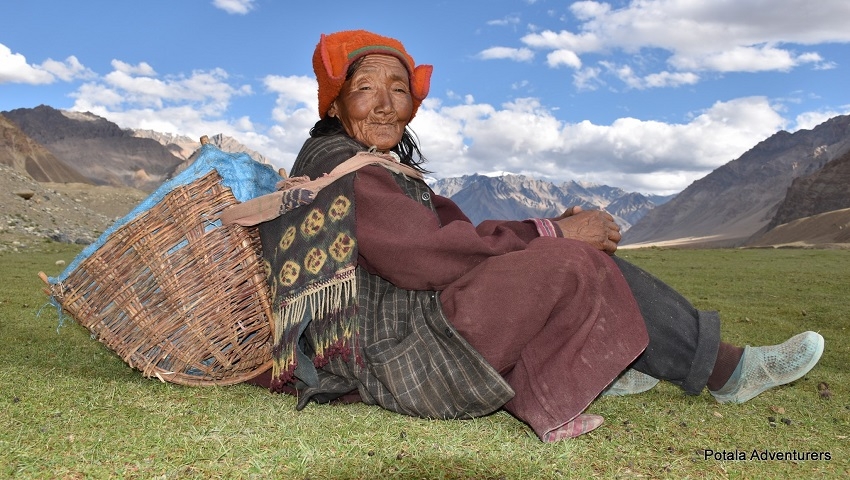
at Zangla
Day 4: Padum – Sani - Dzonkhul 3890m – Abran 3750m - Drang Drung glacier - Pensi La 4494 m – Rangdum 4040m, 160 km, 6-7 hrs.
Sani Gompa is considered the oldest religious site in Ladakh and Zanskar. Located approximately 6 km from Padum, it is unique for being built on flat ground rather than a cliffside. It belongs to the Drukpa Kagyu school and is the only monastery of this order in Zanskar that includes a nunnery.
Kanika Stupa: The monastery's centerpiece is a 20-foot-high stupa believed to date back to the 2nd century CE during the reign of Kushan Emperor Kanishka. It is one of the 108 stupas he purportedly constructed.
Guru Padmasambhava: Said to have meditated for five years in a small chapel known as 'Gamshot Lhakang'. Yogi Naropa: An eminent Indian scholar believed to have meditated under the Kanika Stupa. A small room next to the stupa houses a veiled bronze statue of him. Unique Architecture: Unlike typical Zanskari monasteries, Sani is built in a fortress-like rectangular shape on the central plain. It is surrounded by a rare plantation of ancient poplar trees. Holy Cremation Ground: Outside the complex lies one of the eight most important cremation grounds for Tibetan Buddhists, ringed with ancient rock carvings showing Indian influence.
Sani Naro Nasjal: Held in late July or early August (typically the 15th to 20th of the sixth Tibetan month). For 2026, the festival is scheduled for July 28–29.
Naropa Statue Unveiling: The veiled bronze statue of Naropa is unveiled for public blessing only once a year during this festival.
Cham Dances: Monks from Bardan Monastery perform ritual masked dances. Uniquely, the festival also features dances performed by newlywed brides from the village.
Nungnes: A fasting ritual usually taking place in July
Dzongkhul Monastery is a renowned cave monastery in the Stod valley of the Zanskar region in Ladakh, India. Built into the side of a sheer rock cliff in the Ating gorge, it is one of the most sacred and ancient monastic sites in the region. The monastery is built around two natural caves where the celebrated Indian Buddhist yogi Naropa (956–1041 CE) is believed to have meditated. Dzongkhul belongs to the Drukpa Kagyu sect of Tibetan Buddhism. The foundation is believed to be over 1,000 years old, with the current structures often described as being around 1,000-1200 years old.
Frescoes and Art: The caves contain ancient frescoes and murals, including works by the famous 17th-century painter and scholar, Zhadpa Dorje.
Leaving Dzonkhul, we drive to Upper Stod Valley along the Stod River to Pensi La and pass many small villages along the route to Pensi La.
Pensi La, also spelled Penzi La, is famously known as the "Gateway to Zanskar." Situated at an elevation of approximately 4,400 metres (14,436 feet), this high-altitude mountain pass connects the Suru Valley in Kargil to the remote Zanskar Valley. It lies roughly 150 km south of Kargil and about 25 km from Rangdum Monastery. The pass is the primary entry point for travellers heading from Kargil to Padum via the NH-301 highway.
The pass acts as a watershed; to the west flows the Suru River (a tributary of the Indus), while the eastern flank gives rise to the Doda (Stod) River, which eventually forms the Zanskar River.
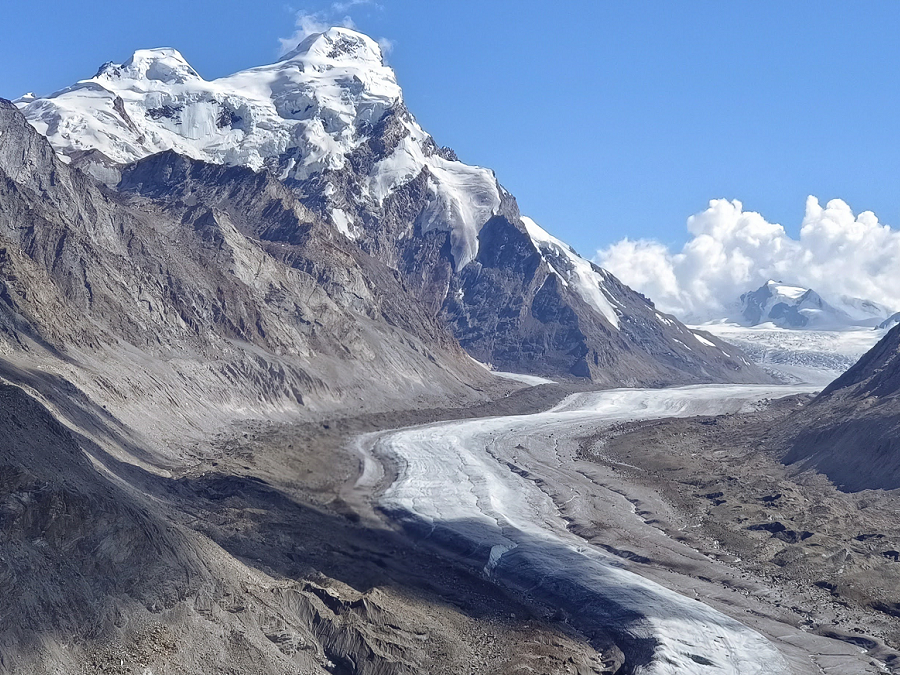
Drang-Drung Glacier: Visible directly from the roadside, this is the most famous sight at Pensi La. It is one of the largest glaciers in Ladakh, stretching about 23 km in length.
Two high-altitude lakes, Stat Tso and Lang Tso, are located near the summit and can be reached via a short walk from the road.
After visiting the Penzi La, drive to the Rangdum plains.
Rangdum is a remote high-altitude plateau in the Kargil district of Ladakh, famously serving as the halfway point between Kargil and Padum. At an elevation of approximately 3,657 metres (11,998 feet), it is the last inhabited spot in the Suru Valley and serves as a cultural bridge between the predominantly Muslim Suru Valley and the Buddhist Zanskar region.
The focal point of the area is the 18th-century Rangdum Monastery, a Tibetan Buddhist site belonging to the Gelugpa (Yellow Hat) sect.
Perched on a steep, sugarloaf-shaped hill at 4,031 metres (13,225 feet).
The fortress-like complex houses a central prayer hall with an impressive collection of Tibetan antiques, ancient thangkas, and a 7-metre-high statue of Maitreya Buddha.
It is home to about 30–40 monks who rely on offerings from the nearby villages of Julidok and Yuldo.
The Archaeological Survey of India (ASI) has considered declaring it a monument of national importance to protect its unique cultural heritage.
Day 5: Rangdum – Parkachik 3600m (Glacier view point) – back to Rangdum - Pensi La - Padum 3600m, 197 km, 7-8 hrs.
Leaving Rangdum today after breakfast, we drive to Parkachik.
Parkachik is a picturesque village and high-altitude attraction in the Suru Valley, located approximately 90 km from Kargil on the route to Zanskar. It is widely celebrated for the Parkachik Glacier, a massive river of ice that descends from the slopes of the Nun Kun massif.
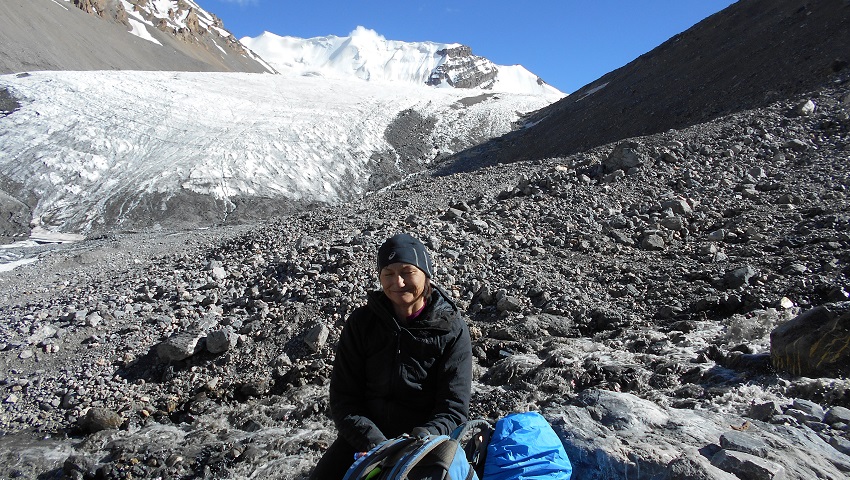
Parkachik Glacier: This 14-km-long glacier flows within meters of the NH 30, making it one of the most accessible glaciers in Ladakh. Visitors can walk across a suspension footbridge over the Suru River to reach its snout.
The Dardi tribe inhabits the village and maintains a peaceful Islamic vibe. It is characterized by lush green fields and traditional stone houses, contrasting with the typical desert landscape of Ladakh.
Parkachik Glacier View Point: Offers extraordinary, up-close views of the massif and the massive Parkachik Glacier that descends from it.
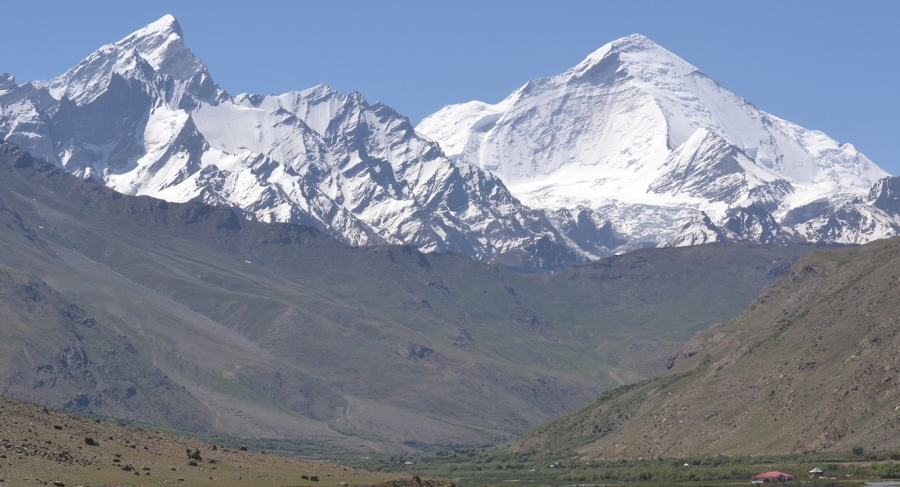
The Nun Kun massif is a massive mountain range in the Zanskar region of Ladakh, northern India. It is famous for its twin peaks, Mount Nun and Mount Kun, which are among the highest in the Indian Himalayas.
The Twin Peaks and Beyond
Mount Nun, standing at 7,135 m (23,409 ft), is the highest peak in the massif and the tallest point in Jammu and Kashmir. It is known for its steep walls and technically demanding slopes.
Mount Kun: At 7,077 m (23,219 ft), it is slightly lower and offers a broader, more gradual approach.
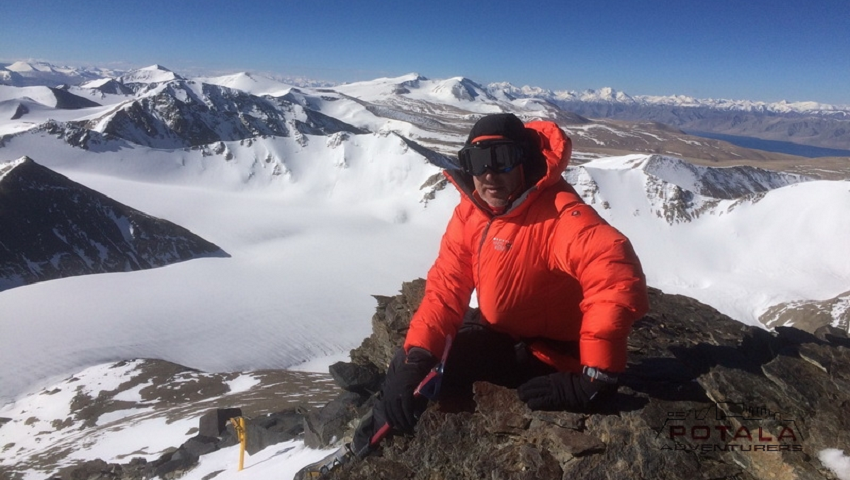
Pinnacle Peak: The third-highest point of the massif, reaching 6,930 m (22,740 ft).
Glacial Plateau: A 4 km-long snowy plateau separates Nun and Kun, making joint expeditions a popular goal for mountaineers.
Mount Kun was first summited in 1913 by an Italian team led by Mario Piacenza.
Mount Nun was first conquered in 1953 by a Swiss-French-Indian team; notable climber Claude Kogan was among the first to reach the summit.
And finally back to Padum for an overnight stay.
Day 6: Padum – Shinku La 5090 – Manali, 240 km, 8-9 hrs.
Early departure from Padum to Manali, arrival at Manali by 4 or 5 pm, trip ends.
Leaving
Manali first to Solang Valley and then to the Atal Tunnel, which is now the new
gateway to Lahaul, Spiti, Pangi, and Zanskar Valley. The landscape changes
dramatically, with greenery being replaced by barren hillsides, surrounded by high peaks and hanging glaciers. The village, with its bountiful fields of
barley, peas, and potatoes, stands out in stark contrast. Upon entering Lahaul,
the Buddhist influence is evident in the numerous monasteries encountered along
the way. The people here have distinct Tibetan features. From Tandi along the
Bhaga River to Keylong and to Jispa, you will have an opportunity to do the
acclimatization hike in Keylong before Jispa. This acclimatization hike will last for 4 to 5 hours, crossing the Bhaga River to Kardang Gonpa. Finishing the hike at
Yurnad, continue driving to Jispa for an hour. Check into the hotel.
Continuing
Jispa to Darcha and to Chikka & Rarik, the last two villages before Shinku
La. Crossing the bridge at Palamo and then along the river to Zanskar
Sumdo. Leaving Zanskar Sumdo, the road goes above the stream, following
the stream that originates from Shinku La. The highest point of our trip at
5,090 meters. On top of Shinku La, there are prayer flags and mani stones that
tell the story of those people who crossed over years back. With an impressive
view of the Zanskar side of the valley, with summits rising above 6000 m of the
Great Himalayan range. The road descends to Lakhong. Lakhong is high pasture
land for yaks, dzo, and sheep, where domestic animals are kept during
summertime and produce cheese and butter for winter stock. Along the right bank
of Kurgiakh chu and below the mass of fallen rocks of Gumbok Rangan peak. We
finally arrive at Kurgiakh, the first village of Zanskar. A short hike to the
most beautiful village of Kyi in the Upper Zanskar valley.
We pass the Karu, Tangze village, to a series of stupas before reaching Purne.
Purne is situated at the confluence between Tsarap and Kurgiak chu and forms the
Lungnak River valley.
Purne to Phuktal distance: There is a road that goes along the left bank of the
Tsarap River up to a wooden bridge 5 km from Purne, a hike of 2 km take you to
the most fascinating sight in Zanskar. This monastery is built under a huge
cave, and it belongs to the Gelukpa sect of Tibetan Buddhism. There is a stone
tablet that serves as a reminder of the stay of Alexander Csoma de Koros at
Phuktal, while he worked on the first English-Tibetan dictionary between 1826
and 1827, when he explored Ladakh.
Leaving Phuktal to Cha village & passes through the beautiful village of
Anmu, Raru & Mune, passing and visiting Bardan gompa, continue to
drive to Padum
Today major attraction of the tour, the Central Zanskar Valley day tour, is the first visit to Karsha monastery. Karsha is one of the biggest monastic complexes in the Zanskar region.
Karsha Gompa is the largest and most important monastery in Zanskar. Perched dramatically on a steep hill overlooking the Padum Valley and the Zanskar River, this 10th-century complex functions as a major scholastic and spiritual hub for the region.
Fortress-like Architecture: The monastery is built in a stepped, cliff-clinging style traditional to Tibetan architecture, housing residential quarters for about 100 monks.
Ancient Art: It contains murals and thangkas that are over 900 years old, including exquisite paintings by the master artist Lama Dzadpa Dorje.
Sacred Relics: The monastery preserves the bone relics of Dorje Rinchen and a silver-crowned statue of Lhaso Cho Rinpoche brought from Lhasa in the 1960s.
Chuk-shik-jal Temple: The oldest structure within the complex, dedicated to Avalokiteshvara, featuring wall paintings linked to the era of the great translator Rinchen Zangpo (958–1055 CE).
Karsha Gustor: This is the most significant annual event, celebrated to mark the victory of good over evil.
2026 Dates: The festival is scheduled for 12–13 July 2026.
Activities: Monks perform sacred Cham (masked) dances and the "Black Hat Dance," accompanied by traditional music and community prayers.
Spiritual Leadership: The monastery is under the control of the younger brother of His Holiness the Dalai Lama.
Leaving Karsha to Thongde, which is built on a hilltop by Lama Marpa and is more than 950 years old, finally drive to visit Zangla Fort. Just above Zangla village, there is a Nunnery that is home to a small community of nuns. The nunnery is a peaceful retreat, offering visitors a chance to experience the spiritual and simple life led by the nuns. Zangla Nunnery is known as
Changchub Choling monastery, Zangpa, since 1989. Funds have been used to build a classroom, provide food for the nuns, and teachers’ salaries. A teacher in the village helps the nuns keep their accounts.
18 nuns are living in the monastery, and 15 novices are living at home who come during the day. Of the 18 nuns living in the monastery, 6 are under 30 and 3 are over 50. The youngest nun is 12 years old, and the oldest is 78. One young nun related that her mother died and her elder sister is disabled and cannot work. She has 3 younger sisters and brothers. She lives at home and comes to the monastery daily for studies. https://www.jamyang.org/pages/changchubcholing.php
Continue to Lingshed Monastery is a Gelugpa Buddhist monastery in Ladakh. It is located near Lingshet village. It is 84 km north of Padum. It was founded in the 1440s by Changsems Sherabs Zangpo, disciple of Je Tsongkhapa, on a monastic site previously founded by the Translator Rinchen Zangpo. The monastery has belonged to the religious estate of Ngari Rinpoche since 1779. The Jangchub Tensung Dorje Center was founded in Lingshed by Kyabje Dagom Rinpoche in 1994.
In 1779, the Ladakhi king Tsewang Namgyal donated the lands of Lingshed and its surrounding villages (along with the Zanskari monasteries and villages of Karsha, Mune, Phuktal and Rangdum) to Lobsang Gelek Yeshe Dragpa, the 3rd incarnate of the Ngari Rinpoche lineage. In 1783, Ngari Rinpoche founded Rangdum Monastery on the boundary of the Karsha Valley as his ecclesiastical seat, to which Lingshed is subordinate.
Finally back to Padum
Sani Gompa is considered the oldest religious site in Ladakh and Zanskar. Located approximately 6 km from Padum, it is unique for being built on flat ground rather than a cliffside. It belongs to the Drukpa Kagyu school and is the only monastery of this order in Zanskar that includes a nunnery.
Kanika Stupa: The monastery's centerpiece is a 20-foot-high stupa believed to date back to the 2nd century CE during the reign of Kushan Emperor Kanishka. It is one of the 108 stupas he purportedly constructed.
Guru Padmasambhava: Said to have meditated for five years in a small chapel known as 'Gamshot Lhakang'. Yogi Naropa: An eminent Indian scholar believed to have meditated under the Kanika Stupa. A small room next to the stupa houses a veiled bronze statue of him. Unique Architecture: Unlike typical Zanskari monasteries, Sani is built in a fortress-like rectangular shape on the central plain. It is surrounded by a rare plantation of ancient poplar trees. Holy Cremation Ground: Outside the complex lies one of the eight most important cremation grounds for Tibetan Buddhists, ringed with ancient rock carvings showing Indian influence.
Sani Naro Nasjal: Held in late July or early August (typically the 15th to 20th of the sixth Tibetan month). For 2026, the festival is scheduled for July 28–29.
Naropa Statue Unveiling: The veiled bronze statue of Naropa is unveiled for public blessing only once a year during this festival.
Cham Dances: Monks from Bardan Monastery perform ritual masked dances. Uniquely, the festival also features dances performed by newlywed brides from the village.
Nungnes: A fasting ritual usually taking place in July
Dzongkhul Monastery is a renowned cave monastery in the Stod valley of the Zanskar region in Ladakh, India. Built into the side of a sheer rock cliff in the Ating gorge, it is one of the most sacred and ancient monastic sites in the region. The monastery is built around two natural caves where the celebrated Indian Buddhist yogi Naropa (956–1041 CE) is believed to have meditated. Dzongkhul belongs to the Drukpa Kagyu sect of Tibetan Buddhism. The foundation is believed to be over 1,000 years old, with the current structures often described as being around 1,000-1200 years old.
Frescoes and Art: The caves contain ancient frescoes and murals, including works by the famous 17th-century painter and scholar, Zhadpa Dorje.
Leaving Dzonkhul, we drive to Upper Stod Valley along the Stod River to Pensi La and pass many small villages along the route to Pensi La.
Pensi La, also spelled Penzi La, is famously known as the "Gateway to Zanskar." Situated at an elevation of approximately 4,400 metres (14,436 feet), this high-altitude mountain pass connects the Suru Valley in Kargil to the remote Zanskar Valley. It lies roughly 150 km south of Kargil and about 25 km from Rangdum Monastery. The pass is the primary entry point for travellers heading from Kargil to Padum via the NH-301 highway.
The pass acts as a watershed; to the west flows the Suru River (a tributary of the Indus), while the eastern flank gives rise to the Doda (Stod) River, which eventually forms the Zanskar River.
Drang-Drung Glacier: Visible directly from the roadside, this is the most famous sight at Pensi La. It is one of the largest glaciers in Ladakh, stretching about 23 km in length.
Two high-altitude lakes, Stat Tso and Lang Tso, are located near the summit and can be reached via a short walk from the road.
After visiting the Penzi La, drive to the Rangdum plains.
Rangdum is a remote high-altitude plateau in the Kargil district of Ladakh, famously serving as the halfway point between Kargil and Padum. At an elevation of approximately 3,657 metres (11,998 feet), it is the last inhabited spot in the Suru Valley and serves as a cultural bridge between the predominantly Muslim Suru Valley and the Buddhist Zanskar region.
The focal point of the area is the 18th-century Rangdum Monastery, a Tibetan Buddhist site belonging to the Gelugpa (Yellow Hat) sect.
Perched on a steep, sugarloaf-shaped hill at 4,031 metres (13,225 feet).
The fortress-like complex houses a central prayer hall with an impressive collection of Tibetan antiques, ancient thangkas, and a 7-metre-high statue of Maitreya Buddha.
It is home to about 30–40 monks who rely on offerings from the nearby villages of Julidok and Yuldo.
The Archaeological Survey of India (ASI) has considered declaring it a monument of national importance to protect its unique cultural heritage.
Leaving Rangdum today after breakfast, we drive to Parkachik.
Parkachik is a picturesque village and high-altitude attraction in the Suru Valley, located approximately 90 km from Kargil on the route to Zanskar. It is widely celebrated for the Parkachik Glacier, a massive river of ice that descends from the slopes of the Nun Kun massif.
Parkachik Glacier: This 14-km-long glacier flows within meters of the NH 30, making it one of the most accessible glaciers in Ladakh. Visitors can walk across a suspension footbridge over the Suru River to reach its snout.
The Dardi tribe inhabits the village and maintains a peaceful Islamic vibe. It is characterized by lush green fields and traditional stone houses, contrasting with the typical desert landscape of Ladakh.
Parkachik Glacier View Point: Offers extraordinary, up-close views of the massif and the massive Parkachik Glacier that descends from it.
The Nun Kun massif is a massive mountain range in the Zanskar region of Ladakh, northern India. It is famous for its twin peaks, Mount Nun and Mount Kun, which are among the highest in the Indian Himalayas.
The Twin Peaks and Beyond
Mount Nun, standing at 7,135 m (23,409 ft), is the highest peak in the massif and the tallest point in Jammu and Kashmir. It is known for its steep walls and technically demanding slopes.
Mount Kun: At 7,077 m (23,219 ft), it is slightly lower and offers a broader, more gradual approach.
Pinnacle Peak: The third-highest point of the massif, reaching 6,930 m (22,740 ft).
Glacial Plateau: A 4 km-long snowy plateau separates Nun and Kun, making joint expeditions a popular goal for mountaineers.
Mount Kun was first summited in 1913 by an Italian team led by Mario Piacenza.
Mount Nun was first conquered in 1953 by a Swiss-French-Indian team; notable climber Claude Kogan was among the first to reach the summit.
And finally back to Padum for an overnight stay.
- All ground transportation to & fro as per the itinerary, Manali - Padum - Leh with an experienced driver.
- 1 night of hotel accommodation at MAPI plan - Breakfast, Dinner.
- 5 nights of homestay accommodation at MAPI plan - Breakfast, Dinner.
- First aid medical kit with mini oxygen bottles.
- Mineral water.
× Domestic flight.
× Lunch while on tour.
× Hotel in Manali & Leh.
× Travel insurance.
× Soft or hard drinks.
× Entrance fee at monasteries.
× Any unforeseen cost arises from natural hazards, such as rain, snow, or roadblocks, which cost extra lodging & boarding beyond the trip Schedule.
TRIP INFO
Activity - Overland Trip
Region: Zanskar, Ladakh
Difficulty level - Easy
Max Altitude - 5090 meters, Shinku La
Max sleeping altitude - 4040 meters, Rangdum
Lowest altitude - 2050 meters, Manali
Trip Length - 8 days, Delhi to Delhi
6 days Manali to Manali
5 nights homestays
Best time - April to Oct.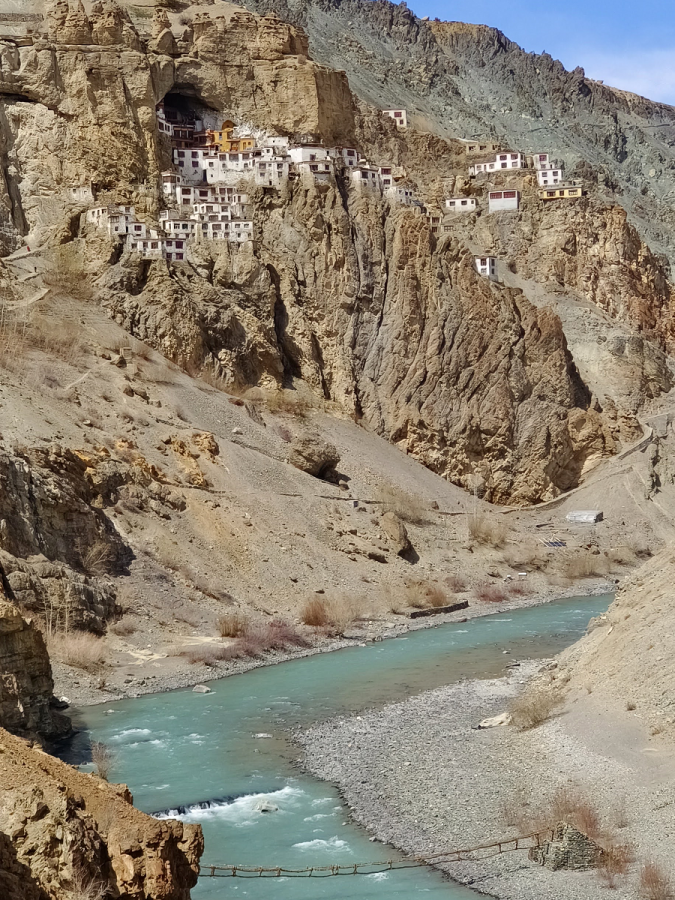
Phuktal Gonpa & Tsarap River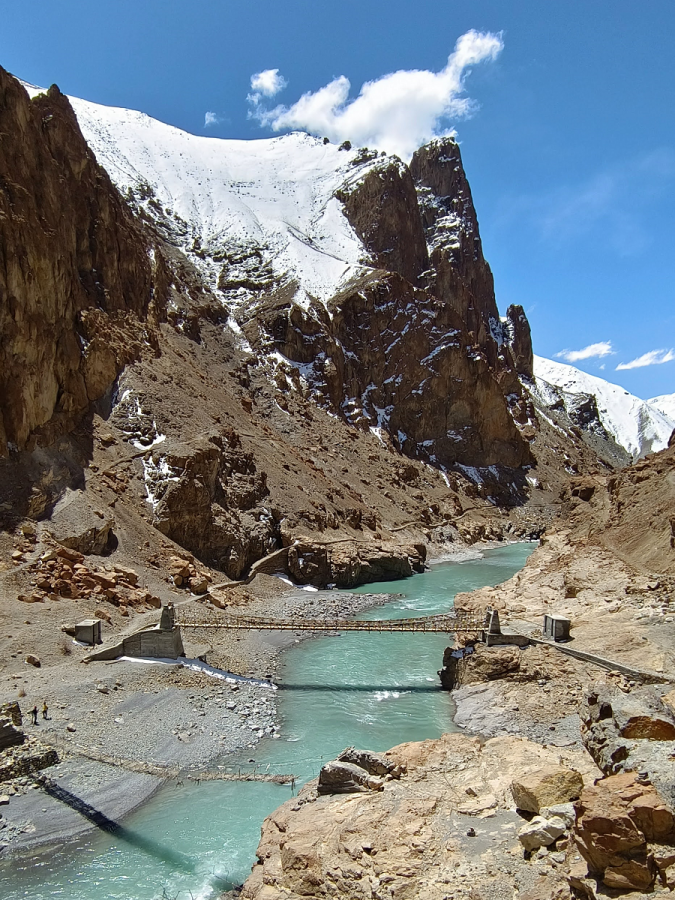
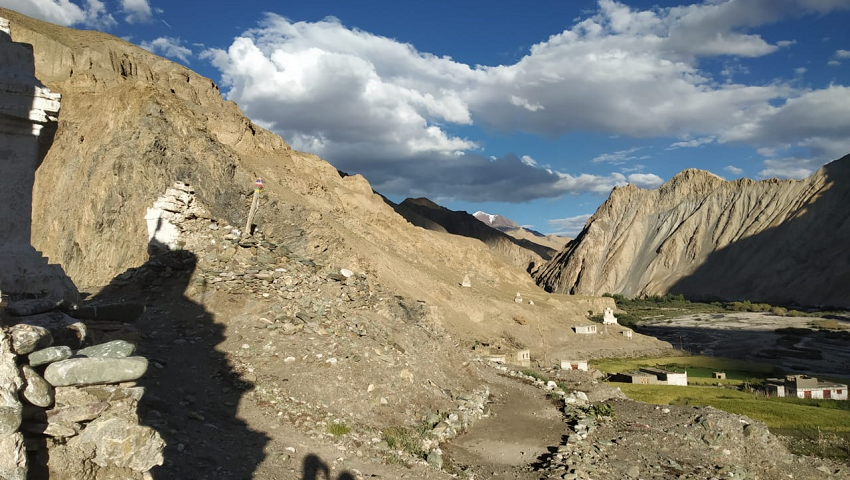
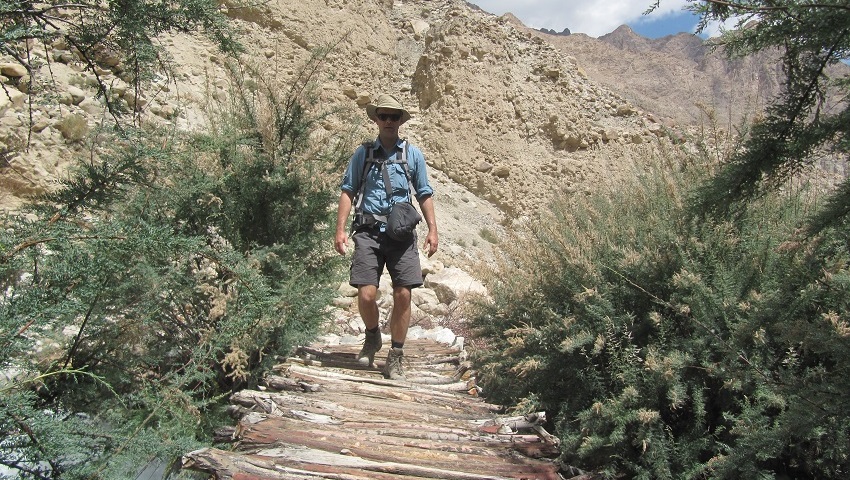
Phuktal bridge - Hike to Phuktal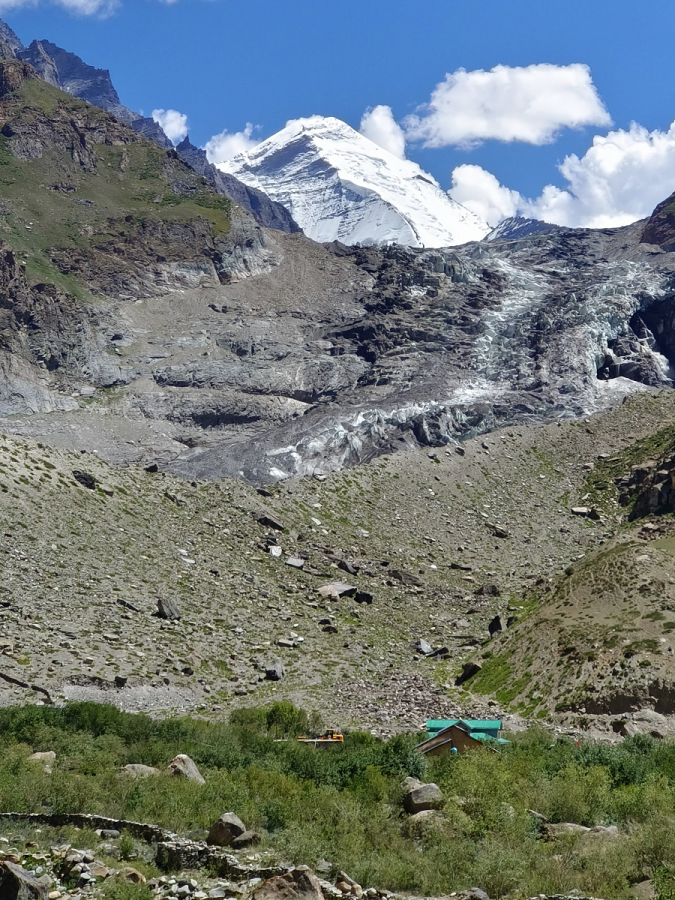
The Nun Kun Massif - Parkachik glacier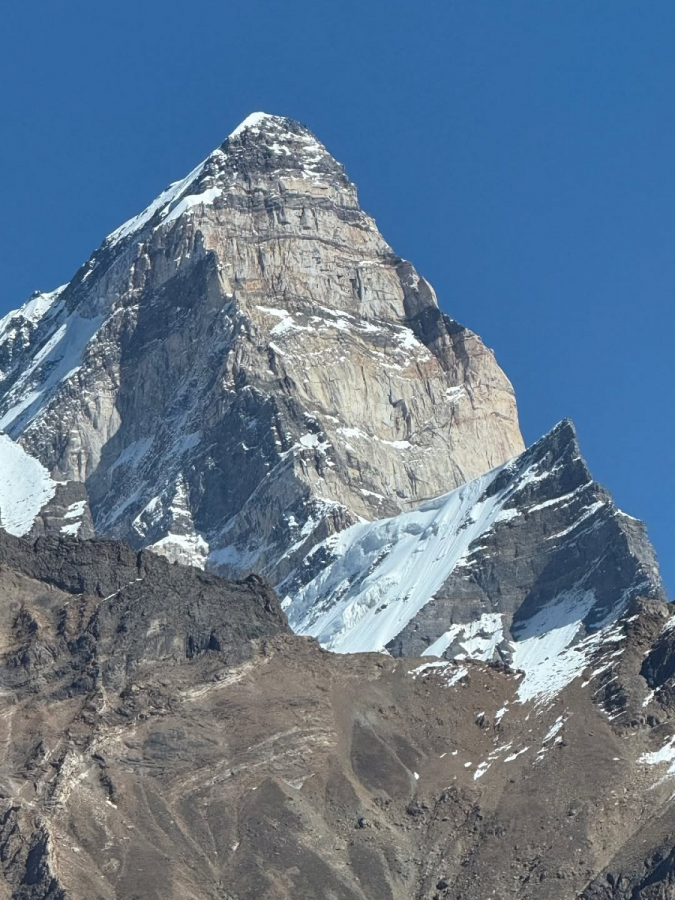
Pinnacle peak 6930m